

First Trimester
So You Just Found Out — Here's What to Do First
You saw the positive test and now your mind is racing. Here are the only three things that actually matter right now, and why everything else can wait.
April 7, 2026 · 5 min read
Second Trimester
The nausea, exhaustion, and anxiety of the first trimester are behind you. Here's what the second trimester usually looks like and what's coming next.
 Thomas Lambert, MD5 min read
If the last several weeks felt like a blur of nausea, exhaustion, and quietly holding your breath — you made it through. The first trimester, with its secrecy and physical misery and cautious anxiety, is behind you now.
For many moms, energy starts coming back around weeks 13 and 14. Appetite returns. The fog lifts a little. And the guarded feeling that defined the first twelve weeks — the constant background check of "Is everything still okay?" — starts to soften into something that feels more like actual excitement.
The first trimester is the most biologically intense period of pregnancy. Your body built the placenta from scratch. Your blood volume began climbing toward the roughly 45 percent expansion it reaches later in pregnancy. Your hormones surged in ways that affected nearly every system in your body — from your digestion to your mood to your ability to stay awake past 7 p.m.
And you did all of that while keeping it a secret, showing up to work, managing nausea, and trying to figure out what "being pregnant" actually means on a daily basis.
That's not nothing. It's worth recognizing.
The second trimester is often described as the most comfortable stretch of pregnancy, and for many moms, that description holds up. Here's what's typically ahead:
Not every mom experiences the second trimester this way. Some continue to deal with nausea, fatigue, or anxiety. But as a general pattern, the shift from survival mode to something more enjoyable is real.
Over the next several months, I'm going to walk you through what to expect when delivery comes — from pain relief options to what happens in the operating room if a C-section is needed. No pressure, no jargon, just clarity at the right time.
The shift you're feeling right now — from surviving to actively preparing — is one of the most important transitions of pregnancy. In the first trimester, your job was to get through it. Now your job is to start making choices. And those choices will feel much more manageable because you've already built a foundation of understanding, one week at a time.
You've been getting through it. Now you get to start looking ahead.
This content is general educational information about pregnancy, birth, and obstetric anesthesia. It is not medical advice and does not replace a conversation with your own doctor. Every birth is different. Talk to your healthcare team about what's right for your specific situation.
If this explanation helped, the newsletter delivers the rest of the library one topic at a time.
Free · sent to your inbox in minutes
First Trimester
You saw the positive test and now your mind is racing. Here are the only three things that actually matter right now, and why everything else can wait.
April 7, 2026 · 5 min read

First Trimester
Most pregnant moms feel nausea, and for many it's not just mornings. Here's why it happens, what actually helps, and when to call your doctor.
April 7, 2026 · 6 min read
Second Trimester
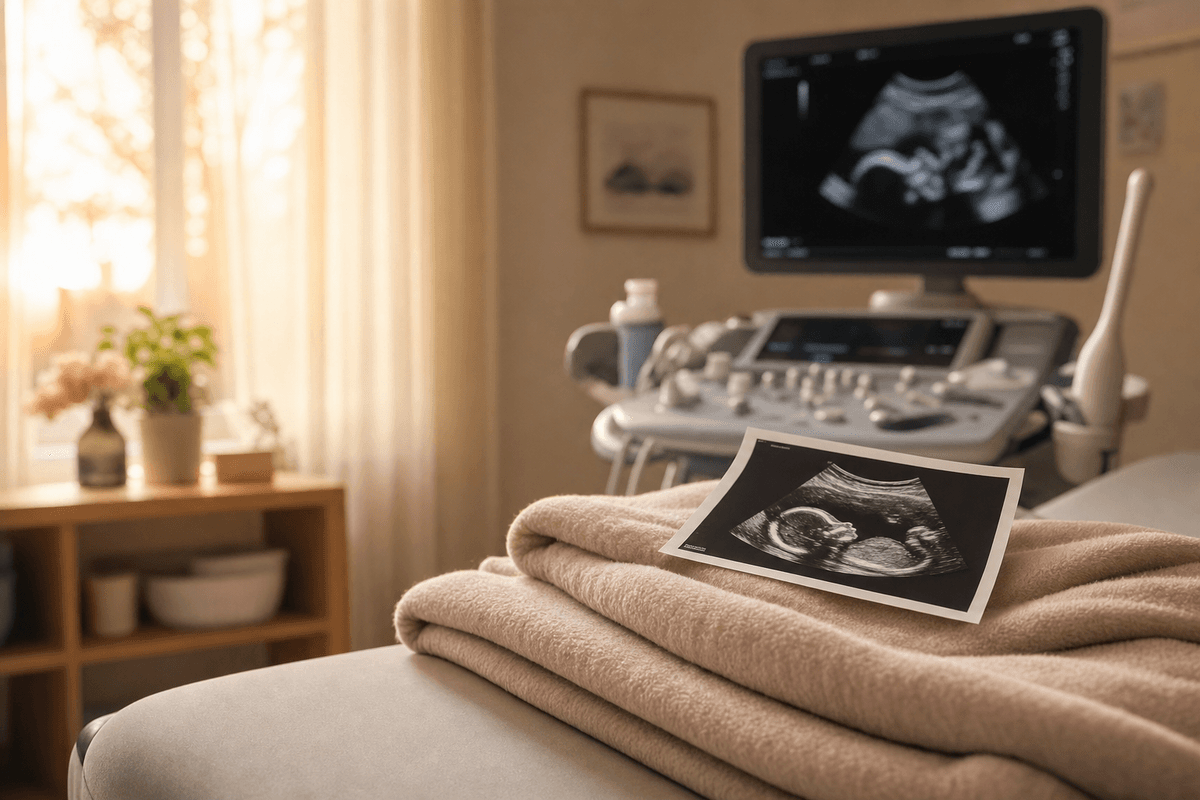
The anatomy scan is the detailed mid-pregnancy ultrasound. Here's what they check, how long it takes, why the sonographer goes quiet, and how to walk in calmer.
May 29, 2026 · 4 min read
I acknowledge that: