
C-Section
Packing for the Possibility of an Unplanned C-Section
Most hospital-bag lists assume a vaginal birth. A few extra items make an unplanned cesarean far less stressful. Packing them is preparedness, not bad luck.
May 28, 2026 · 5 min read
Birth Planning
A hospital bag checklist for labor, after the birth and your baby, plus what the hospital usually provides, what to leave at home and when to pack it.
 Thomas Lambert, MD7 min read
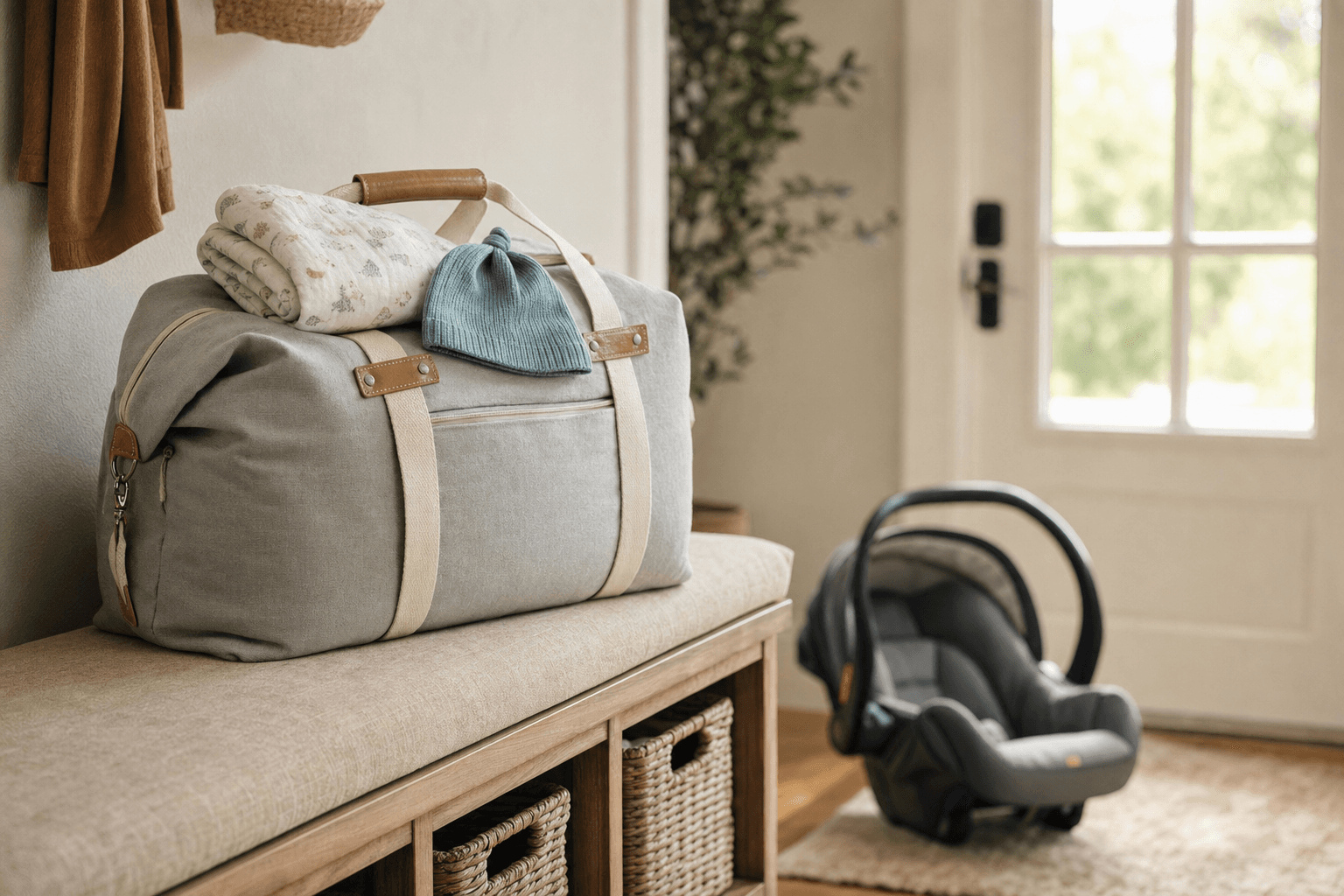
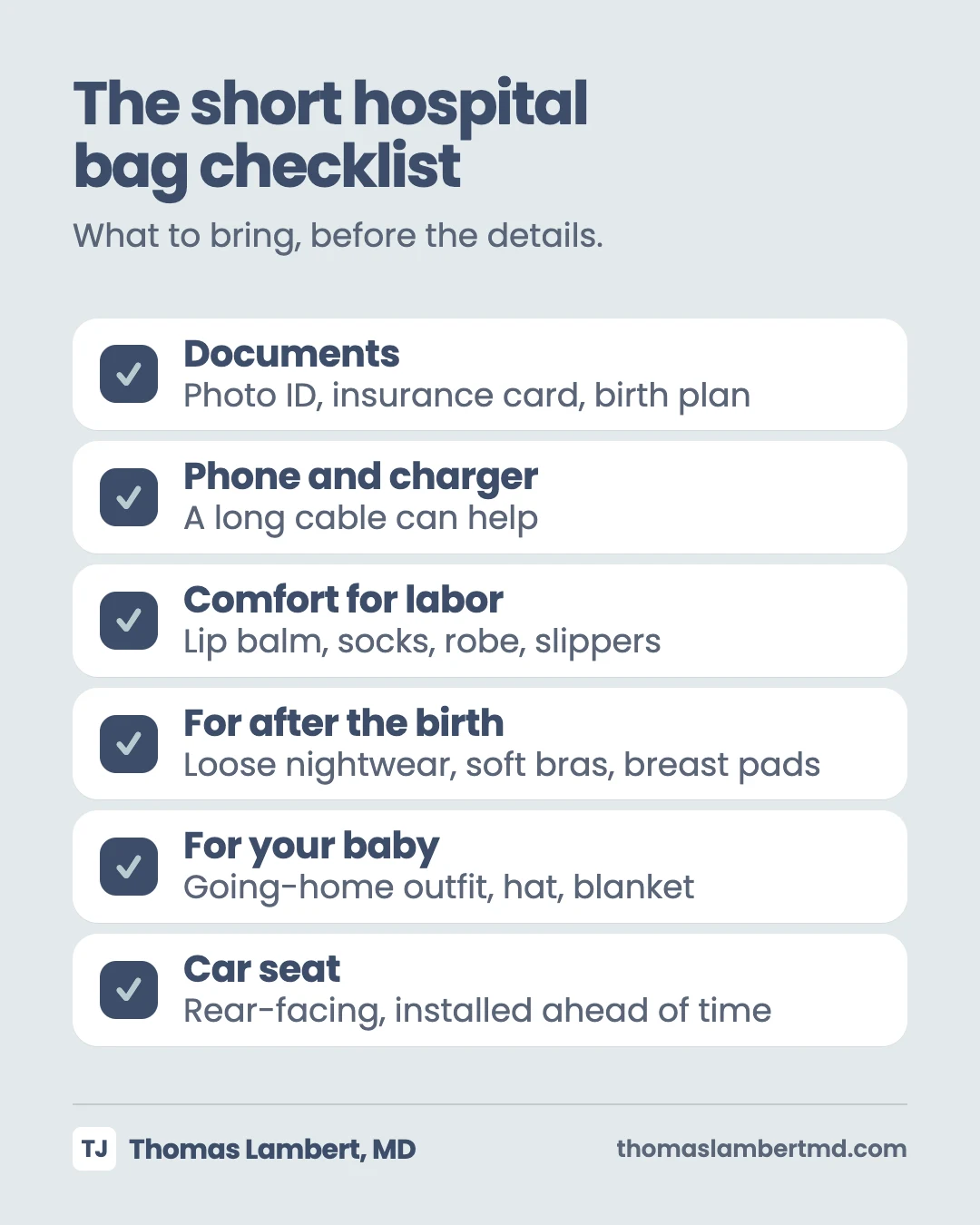
Packing a hospital bag can feel like a test you're supposed to know the answers to. You don't need a giant suitcase or a shopping trip. What you need is a short list of things the hospital won't hand you, a few comforts that make a long stay easier, and a safe way to get your baby home. Here's the checklist, then the details behind each part.
If you only read one section, make it this one. Most of what you'll use in the hospital is either something only you can bring (your ID, your phone, your clothes) or something for the trip home. Much of the rest, like pads, mesh underwear and diapers, is often supplied while you're there; Cleveland Clinic says the hospital provides those, and that your baby's needs during the stay are covered too.
Labor can be long, and small comforts help. The NHS checklist suggests loose, comfortable clothing to wear during labor, a dressing gown and slippers or flip-flops, socks, lip balm, hair bands, an eye mask for a brightly lit room, your own pillow, and something to help you relax and pass the time, like music or a podcast. It also suggests an extra-long charging cable or a battery pack for your phone.
Snacks and a water bottle (one with a straw is handy) are on the NHS list too. Whether you can eat during labor depends on your situation and your hospital's policy, so it's worth asking ahead of time; eating and drinking during labor walks through why that varies. Either way, snacks are welcome after the birth, and your support person will be glad of them.
Cleveland Clinic notes that hospital gowns are provided, so your own labor clothes are about comfort, not necessity. Pick things you won't mind staining.
This is where your own things can make the biggest difference to how you feel. From the NHS and Cleveland Clinic lists:
If you want a sense of how long you might stay and what those days look like, your hospital stay after birth covers it.
Your baby's bag is small, because the hospital usually covers what your baby needs during the stay. Cleveland Clinic lists diapers, wipes and bottles among the things provided, so you mainly pack for the trip home:
The American Academy of Pediatrics says infants should ride rear-facing, starting with their first ride home from the hospital. It also suggests that expectant parents consider working with a certified child passenger safety technician before the baby is born, to make sure the seat is installed correctly. Doing this weeks ahead means nobody is reading a manual in the hospital parking lot.
A puffy snowsuit seems like the obvious choice, but the AAP's winter car seat guidance says bulky clothing, including winter coats and snowsuits, shouldn't be worn under a car seat harness. In a crash, the padding flattens and leaves the straps too loose. Instead, dress your baby in thin layers, buckle the harness snugly, then lay a blanket or coat over the buckled straps. Leave your baby's face uncovered. Skip add-on inserts or bundling bags that didn't come with your car seat, since they haven't been crash tested with it, and take the blanket off once the car warms up.
Your partner or support person isn't a patient, so the hospital may not feed them. Cleveland Clinic suggests they bring money for snacks and meals, with small bills for vending machines, plus a change of clothes, toiletries, comfortable clothes and socks for sleeping, and chargers. The NHS adds any medicines they take and spare glasses or contact lenses if they wear them.
These are small but easy to forget, so they're worth packing first:
Ask before you pack them. Cleveland Clinic says that with a little planning, the hospital pharmacy can provide what you need during your stay, and suggests discussing your prescription and nonprescription medications with your provider ahead of time and bringing a list. Hospitals differ on whether you can take your own supply, so your OB or midwife's office is the right place to ask. If you do bring any, don't take them in the hospital without telling your nurse first, so your team knows what you've had.
Many hospitals stock the bulky postpartum basics, which is why your bag can stay small. Cleveland Clinic says the hospital will provide mesh postpartum underwear and plenty of pads, and that it's common to be sent home with peri bottles, diapers, wipes, mesh underwear and pads. Supplies vary from hospital to hospital, though, so a quick call or a question at your hospital tour is worth it.
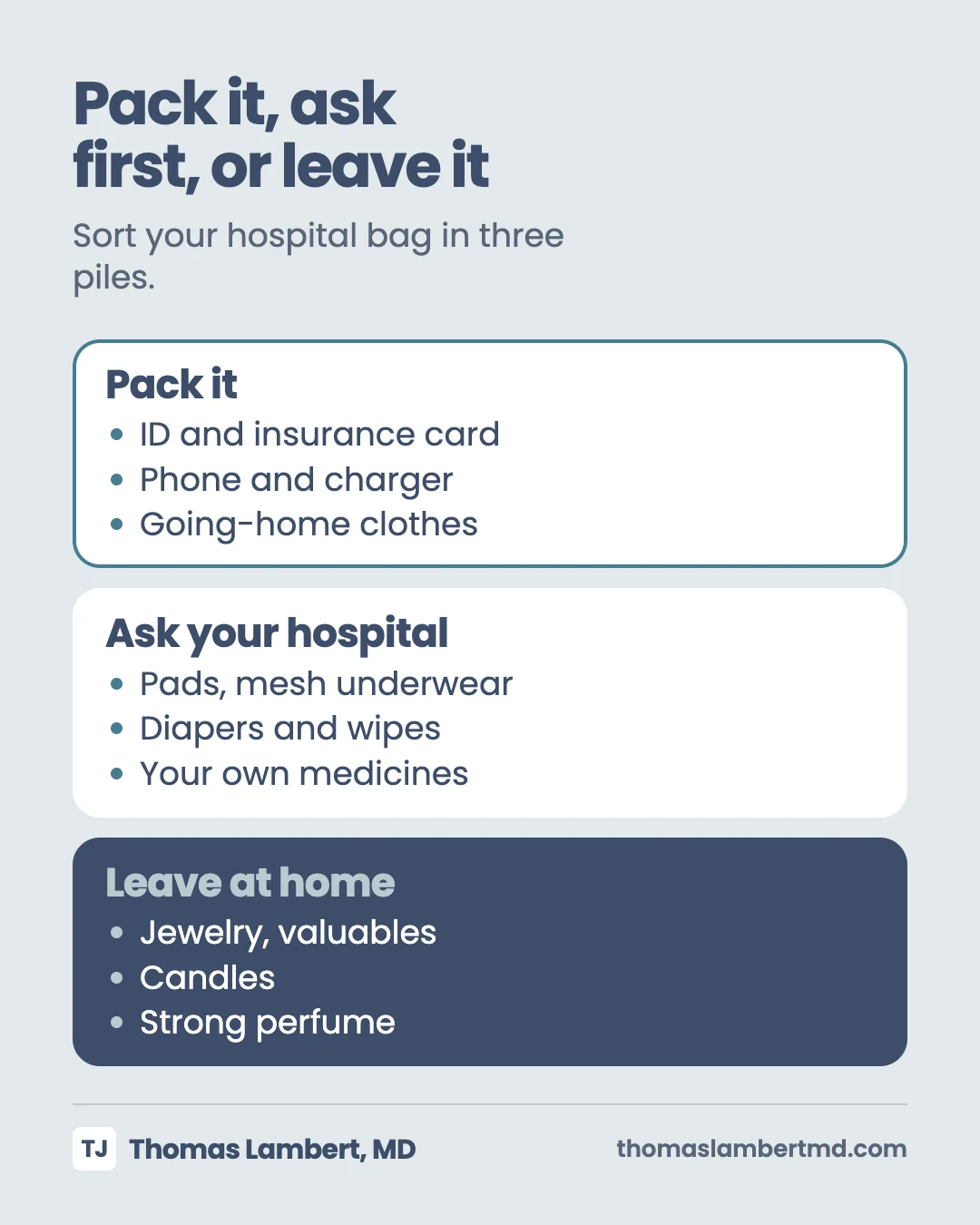
A few things are better left behind:
Sources give slightly different timeframes, and they agree on the main point: pack well before your due date. The NHS suggests having it packed at least 3 weeks ahead of your due date, noting that only 1 in 20 babies arrive on their due date. Northwestern Medicine suggests packing by 36 weeks, and Cleveland Clinic suggests a month or two before your due date.
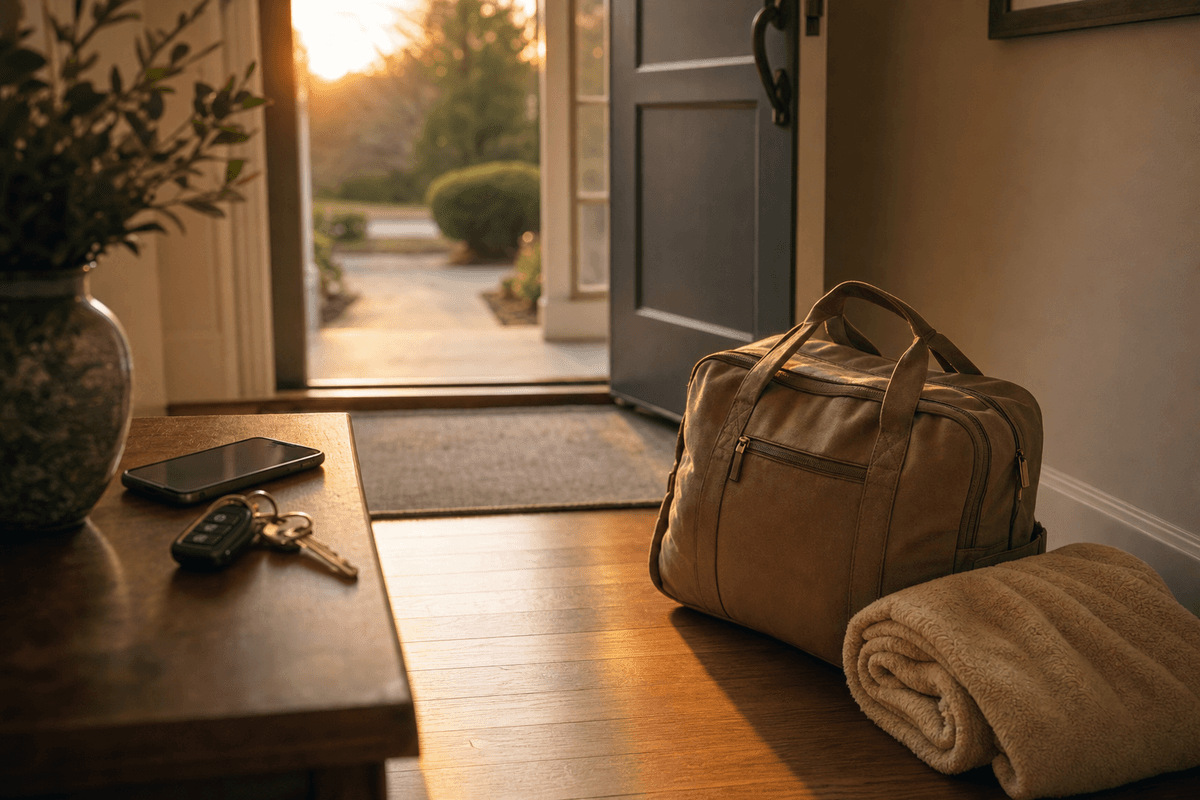
A simple approach: pack the bag early, leave it by the door or in the car, and keep a short note on top for the last-minute items you use daily, like your phone charger and glasses. If you're not sure when it's time to head in, when to go to the hospital in labor can help.
And if you forget something, that's okay. Cleveland Clinic points out that someone may be able to bring it, and that your healthcare team will make sure you and your baby are fine.
Whether your C-section is planned or a possibility, a few extras make recovery easier, like high-waisted underwear that sits above the incision and loose clothes that don't press on it. Packing for an unplanned C-section covers that small add-on list.
Two things from hospital pre-surgery instructions are worth knowing now. Some hospitals ask you to wear your glasses rather than contact lenses on the day of surgery; Eisenhower Health's C-section instructions say exactly that. And jewelry may need to come off, so it's simpler to leave it at home. Your hospital's own instructions are the ones to follow.
If you'd like a list to tick off on paper, the NHS offers a downloadable checklist you can edit and print. It's written for UK hospitals, so it uses words like "nappies" for diapers and "maternity pads" for postpartum pads, and it includes some items US hospitals often supply.
However your birth goes, a bag packed early is one less thing on your mind, so you can walk in calm and ready.
This content is general educational information about pregnancy, birth, and obstetric anesthesia. It is not medical advice and does not replace a conversation with your own doctor. Every birth is different. Talk to your healthcare team about what's right for your specific situation.
Notes on labor, pain relief and anesthesia from an obstetric anesthesiologist. The first email brings the free C-section preparation guide, a separate read to keep for later.
100% Free · Secure & Private
You'll get the guide plus occasional emails from Dr. Thomas, including offers for his paid guides. Unsubscribe anytime.
C-Section
Most hospital-bag lists assume a vaginal birth. A few extra items make an unplanned cesarean far less stressful. Packing them is preparedness, not bad luck.
May 28, 2026 · 5 min read
Labor
Knowing when to leave for the hospital takes the pressure off the early hours. Here's the standard 5-1-1 framework and the signs that change the timing.
May 28, 2026 · 5 min read

Recovery
Between the frequent checks, the feeding, and a famously rough first night, the postpartum hospital stay surprises a lot of moms. Here's what to expect.
May 28, 2026 · 5 min read