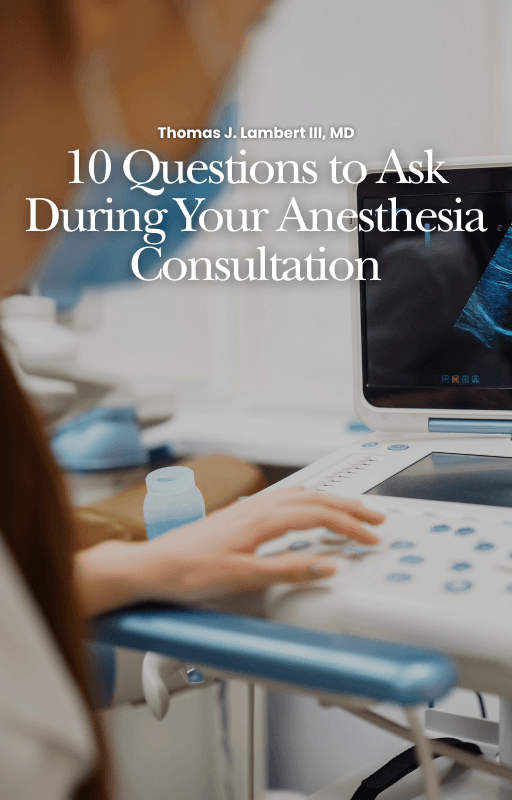
Free PDF Guide
The Anesthesia Consultation: 10 Questions Before Delivery
A prenatal anesthesia consult is a short, focused appointment most moms don't know they can ask for — and it's where the labor-day conversation becomes confirmation instead of education from zero. This free guide gives you the ten questions to ask, what to bring, and how to turn the answers into a birth plan that bends without breaking.
- No card required
- Instant PDF download
- Yours to keep

Written by Thomas Lambert, MDBoard-certified obstetric anesthesiologist
The real question
The best anesthesia conversation happens before labor day
On delivery day, the anesthesia conversation often happens fast — sometimes mid-contraction. A prenatal consult moves that conversation earlier, when you can actually think, and maps what's medically possible for your specific history.
This guide hands you the ten questions that pull out the information specific to you, the short list of what to bring, and the few answers that should send you back to your OB. It works at a formal consult, a hospital tour, or a regular OB visit.
Inside the guide
What’s inside
Everything you need to get a useful anesthesia consult — including the ten questions and a printable worksheet to fill in together.
- 01
Why This Consult Matters
What a prenatal anesthesia consult is, and what it can actually accomplish.
- 02
Who Should Ask for One
The medical and personal reasons to request a consult — and how to ask for the referral.
- 03
What to Bring
The short list the anesthesia team actually wants (and what you can leave at home).
- 04
The 10 Questions
The core questions, in order, with the right follow-ups under each one.
- 05
Special Situations
Scoliosis, blood thinners, preeclampsia, high BMI, needle fear — what each conversation covers.
- 06
Answers That May Change Your Plan
The handful of answers that should prompt a follow-up with your OB.
- 07
Turning Answers Into a Birth Plan
Flexible notes, not rigid demands — the anesthesia section in three bullets.
- 08
Appointment Worksheet
A printable page: fill the left column before, write the team's answers on the right.
What you'll walk away with
- The ten questions that surface the information specific to your history and preferences
- A clear sense of whether to request a formal consult — and how to ask for it
- The short list of what to bring, and what you can skip
- How common side effects are managed, and what's worth flagging during labor
- A printable worksheet that turns the appointment into a shared plan
Who this guide is for
- Moms who want to settle pain-relief decisions before labor arrives
- Anyone with a medical history — spine, heart, bleeding, high BMI, prior anesthesia — that deserves planning
- Moms with anxiety or needle fear who want to walk in already heard

Who wrote this
Thomas Lambert, MD
Dr. Lambert is a board-certified obstetric anesthesiologist who spends his days in labor and delivery. He writes these guides the way he explains things at the bedside — plainly, without the fear — so you can walk in calm and ready, whatever you decide.
FAQ
Questions moms ask
- What is a prenatal anesthesia consult?
- A focused appointment, usually about 20 to 45 minutes, where you meet an anesthesia provider before delivery to map what's medically possible for you — so the labor-day conversation is confirmation, not education from scratch.
- When can I ask for an epidural in labor?
- Current guidance ties it to your wanting one in established labor, not a specific number of centimeters. Local practices vary, which is exactly the kind of thing to ask about at the consult.
- Can I have an epidural with scoliosis or prior spine surgery?
- Most moms with scoliosis or a prior fusion still can. Severe curves or hardware are technical challenges the team plans for — sometimes with ultrasound or a different interspace, and sometimes a bit more time.
- What should I bring?
- A written list of questions is the single most useful thing, plus your conditions, current medications and allergies, prior anesthesia experiences, and any spine or airway history. You don't need your full records or a birth plan.
- What if I can't get a formal consult?
- The ten questions work at a hospital tour or a regular OB visit too — and anything that changes when, where, or how you go to the hospital gets written down for your OB.
Start reading today
A consult isn't a test you pass — it's a plan you and the team build together. Walking in with the right questions is what turns delivery day into something you've already rehearsed.
No card required · instant PDF download · yours to keep
Related
Useful next options
$29.90
C-Section Prep Pack
C-section preparation, emergency context, and consultation questions.
View option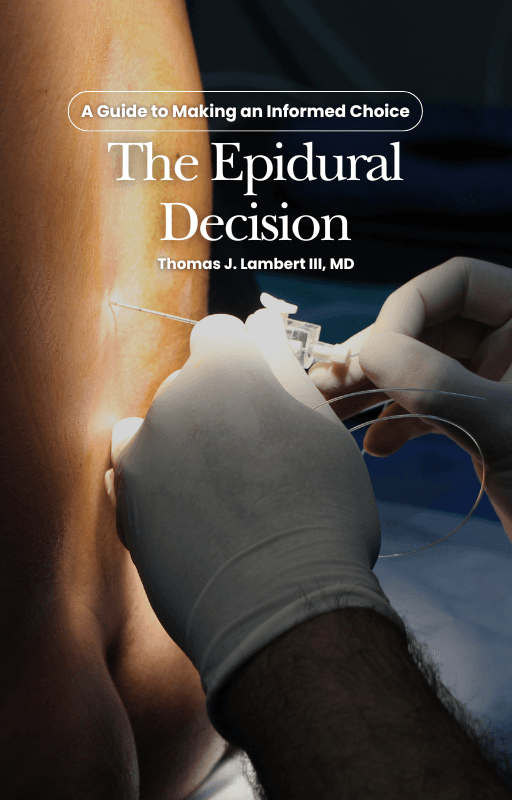

$29.90
Anesthesia Planning Pack
Anesthesia questions, epidural decisions, and VBAC-specific planning.
View option
$59.90
Complete Ebook Library
All 10 Dr. Thomas PDF guides in one library offer.
View option