

First Trimester
Cramping, Spotting, and When to Call Your Doctor
Light cramping and spotting in early pregnancy are common and usually normal. Here is what to watch for, what to monitor, and when to pick up the phone.
April 7, 2026 · 6 min read
Second Trimester
That sharp pull in your lower belly or groin when you move is often round ligament pain. Why it happens, what eases it, and when it's something else.
 Thomas Lambert, MD5 min read
If you've ever stood up too fast, rolled over in bed, or sneezed and felt a sudden sharp pull low in your belly or groin, there's a good chance you've met your round ligaments. Round ligament pain is one of the most common aches of the second trimester, and it's almost always exactly what it sounds like: a stretch, not a warning.
It catches moms off guard because it's sharp and sudden, and "sharp and sudden" sounds like it should mean something is wrong. Most of the time, it doesn't.
You have two round ligaments — thick, cord-like bands that run from the front of your uterus down through your groin. Their job is to help hold your uterus in position. Think of them as a pair of support cables anchoring the uterus to the pelvis.
As your uterus grows, those ligaments stretch to keep up. They're not used to being this long, and they don't love being asked to stretch quickly. When you make a sudden movement, the ligament tightens fast — like a rubber band snapping taut — and that quick pull is what produces the sharp twinge.
This is why round ligament pain tends to show up most in the second trimester. That's when your uterus is growing fastest relative to where the ligaments started, so they're under the most active stretch.
Round ligament pain has a pretty recognizable signature:
The key features are "sharp," "brief," and "tied to movement." A pain that fits all three is very likely your round ligaments.
You can't make the stretching stop — that's your body doing its job — but you can take a lot of the edge off:
None of these are dramatic, and that's the point. Round ligament pain is a small mechanical problem with small mechanical fixes.
This is the part worth reading carefully, because sharp lower-belly pain in pregnancy isn't always the ligaments. Call your OB or midwife if the pain:
These features point away from round ligament pain and toward causes your team will want to evaluate — anything from a urinary tract infection to preterm contractions to other issues that deserve a look. None of them are reasons to panic, but all of them are reasons to make the call rather than wait.
If you're ever genuinely unsure whether your pain is "just ligaments," that uncertainty is itself a good reason to check in. Describing it — "it's sharp, it's brief, it happens when I move" versus "it's constant and getting worse" — usually gives your team enough to point you in the right direction quickly.
Round ligament pain is the price of admission for a uterus that's growing on schedule. It's sharp, it's startling, and it's almost always benign — a set of support cables stretching to keep up with your baby. Slow movements, a little support, and bracing before a sneeze handle most of it. The small list of "this is something else" features is what tells you when to stop troubleshooting at home and call instead.
This content is general educational information about pregnancy, birth, and obstetric anesthesia. It is not medical advice and does not replace a conversation with your own doctor. Every birth is different. Talk to your healthcare team about what's right for your specific situation.
If this explanation helped, the newsletter delivers the rest of the library one topic at a time.
Free · sent to your inbox in minutes
First Trimester
Light cramping and spotting in early pregnancy are common and usually normal. Here is what to watch for, what to monitor, and when to pick up the phone.
April 7, 2026 · 6 min read

Second Trimester
The nausea, exhaustion, and anxiety of the first trimester are behind you. Here's what the second trimester usually looks like and what's coming next.
April 7, 2026 · 5 min read
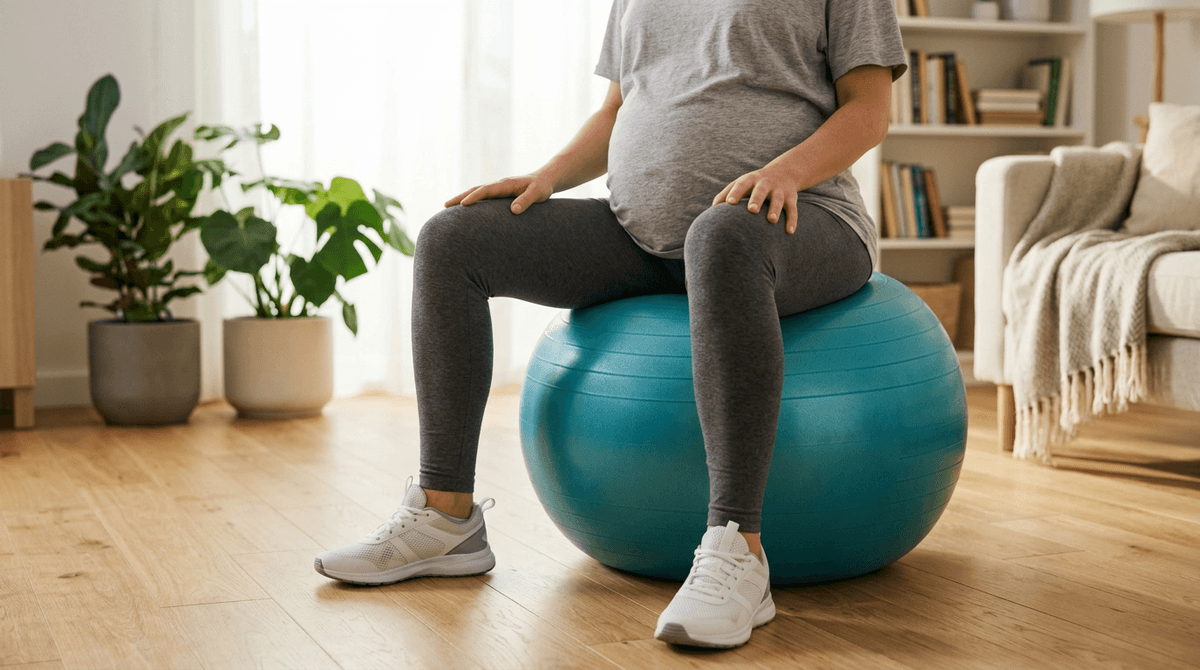
Pregnancy Fitness
Exercise in pregnancy isn't just about health. Research suggests it may shorten labor and lower C-section rates. Here's what your anesthesiologist sees.
April 7, 2026 · 6 min read
I acknowledge that: