

Pain Relief
Pain Relief in Labor Is Not One Single Path
Pain relief in labor isn't one decision — it's a toolkit you can mix, sequence, and change. Here's the realistic menu, from movement to epidural.
April 7, 2026 · 5 min read
Labor
A TENS unit is a small, drug-free device some moms swear by in early labor. Here's how it works, what the evidence says, and how to use one well.
 Thomas Lambert, MD5 min read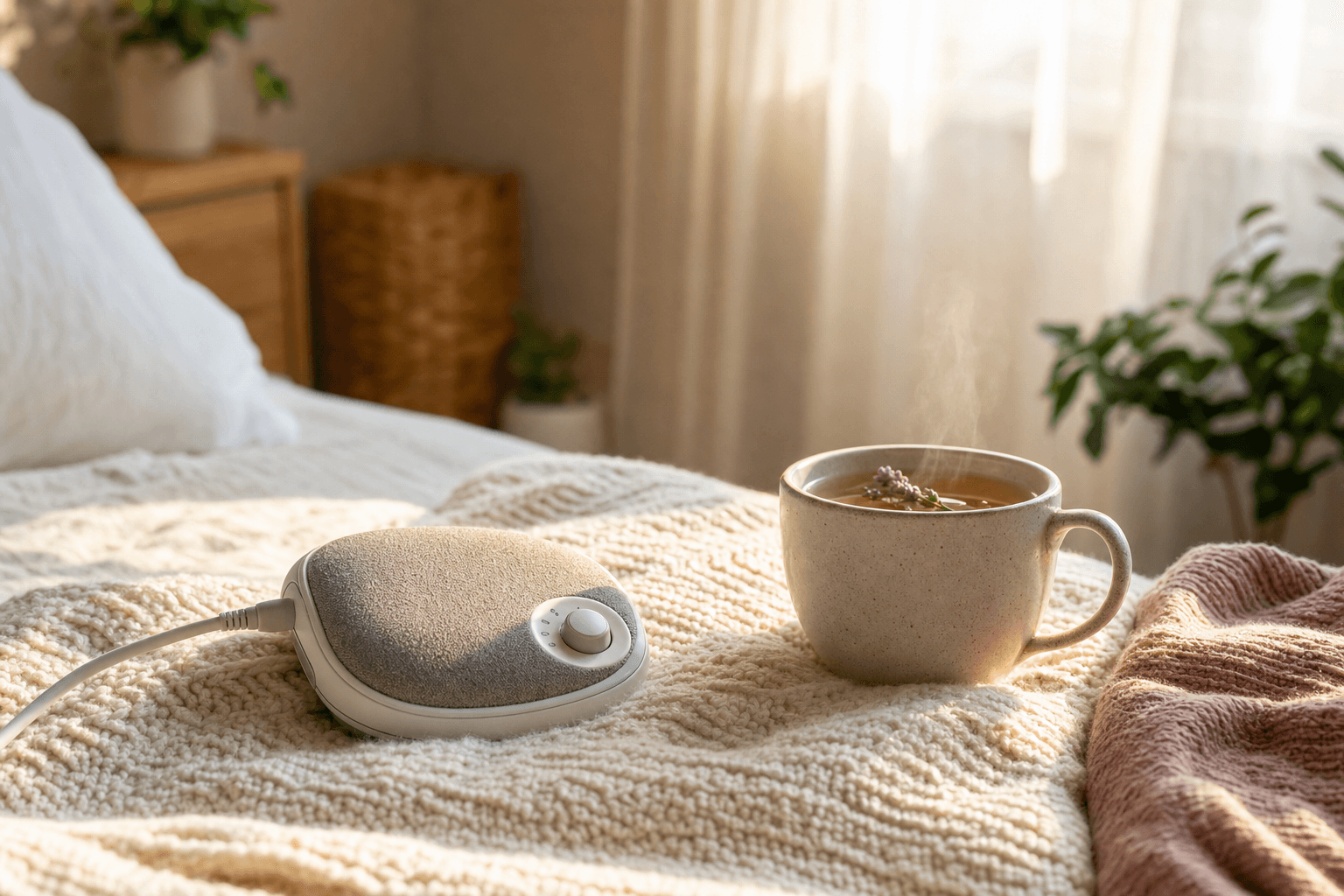
If you've been reading up on drug-free ways to get through labor, you've probably come across the TENS unit — a little gadget that moms in some circles absolutely swear by, and that others have never heard of. As an anesthesiologist, I think it's a genuinely nice tool to have in your kit, as long as you go in with realistic expectations. So here's the straight talk: what it is, whether it actually works, and how to get the most out of it.
TENS stands for transcutaneous electrical nerve stimulation, which is a mouthful for a pretty simple device. It's a small, battery-powered unit, about the size of a phone, connected to sticky pads you place on your lower back. The unit sends gentle electrical pulses through the pads — you feel them as a buzzing, tingling, or prickling sensation. You hold the controller and turn the intensity up or down, and most units have a "boost" button you press during a contraction for a stronger pulse, then ease off between.
That last part matters: a TENS unit gives you the controls. For a lot of moms, having a dial in their own hand during labor is part of the appeal.
There are two ideas behind it. The first is the "gate-control" theory — the notion that the buzzing sensation travels along nerves and essentially competes with pain signals for your brain's attention, partly crowding the pain out. The second is that the stimulation may nudge your body to release more of its own natural pain-relieving endorphins.
Whether it's one, both, or partly the sense of control and distraction, many moms find the buzzing genuinely takes the edge off, particularly in the earlier hours.
Here's where I'll be straight with you, because the marketing won't be. The research on TENS for labor is limited and mixed — studies don't show it reliably producing strong pain relief the way an epidural does. So if you're picturing it erasing labor pain, that's not what it delivers.
What the evidence does support is that it's very low-risk, and that a meaningful number of moms report it helps — especially in early and active labor, and especially for back labor, where the lower-back placement lines up nicely with where the ache lives. So the fair way to think about it: not a heavy hitter, but a low-cost, low-risk option that helps many moms cope, buys time in early labor, and gives you something active to do with your hands. For some, that's exactly enough. It fits right into the idea that pain relief in labor isn't one single path.
A few practical tips make a real difference:
Knowing the limits keeps you from being disappointed:
Think of a TENS unit as a friendly early-labor companion rather than a magic off switch. It's drug-free, it keeps you upright and moving, it puts a control in your hand, and for many moms it genuinely helps — while leaving every other option, including an epidural, fully on the table. That flexibility is exactly what lets you walk into labor feeling calm and ready.
This content is general educational information about pregnancy, birth, and obstetric anesthesia. It is not medical advice and does not replace a conversation with your own doctor. Every birth is different. Talk to your healthcare team about what's right for your specific situation.
If this explanation helped, the newsletter delivers the rest of the library one topic at a time.
Free · sent to your inbox in minutes
Pain Relief
Pain relief in labor isn't one decision — it's a toolkit you can mix, sequence, and change. Here's the realistic menu, from movement to epidural.
April 7, 2026 · 5 min read

Labor
A warm shower or tub is one of the simplest comfort tools in labor. Here's how water helps, when you can use it, and how it differs from a water birth.
May 28, 2026 · 4 min read

Pain Relief
Nitrous oxide is a patient-controlled, inhaled option for labor pain. Here's how it works, what it really feels like, and whether your hospital offers it.
May 28, 2026 · 5 min read
I acknowledge that: