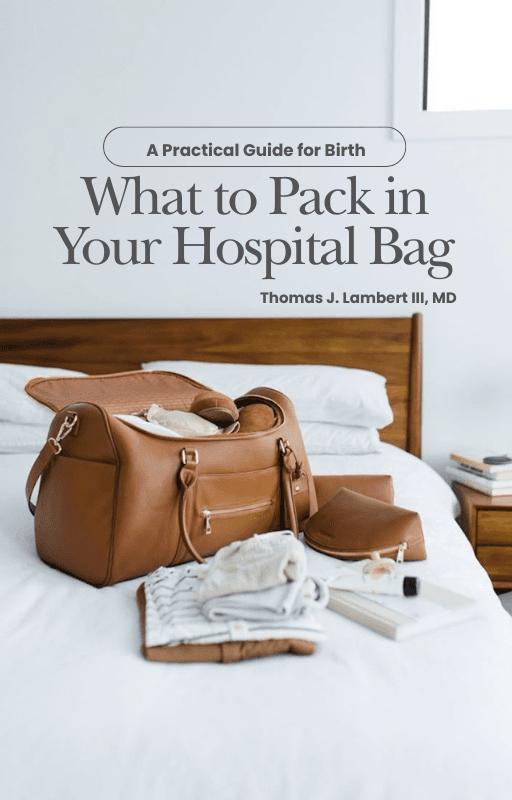
PDF Ebook
The Hospital Bag + First Two Weeks Checklist
Most hospital-bag lists are really registry marketing. This one is the opposite — an obstetric anesthesiologist's take on what actually matters across the window almost no one prepares for: the five days before delivery through the first two weeks at home. Less to pack, more to know, and a clear list of the symptoms that should never wait.
- Secure Stripe checkout
- Instant PDF download
- Yours to keep

Written by Thomas Lambert, MDBoard-certified obstetric anesthesiologist
The real question
The bag matters less than the two weeks after it
Packing lists obsess over the bag and stop at the hospital doors. But the part that catches families off guard is the going-home setup and the first two weeks — recovery, feeding, sleep, and knowing what's normal versus what deserves a call.
This guide right-sizes the bag (the hospital provides more than you'd think), gets your home ready before delivery day, and lays out realistic recovery — including the anesthesia timeline and a printable red-flags page both of you should know.
Inside the guide
What’s inside
A calm map of the last weeks before birth through the first two weeks home — plus printable checklists for the fridge.
- 01
The Timeline
A map of the whole window — from packing to your first calm morning at home.
- 02
Mom's Hospital Bag
What to pack, what the hospital already provides, and a few things to leave home.
- 03
Partner's Bag + Role
What to bring, and the three jobs in the room that are actually theirs.
- 04
Baby's Hospital Bag
The short list of what baby truly needs for the first 48 hours.
- 05
The Going-Home Setup
The safe-sleep, feeding, and recovery setup to have ready before delivery day.
- 06
Mom's First Two Weeks
Bleeding, cramping, the anesthesia timeline, and C-section healing — what's normal.
- 07
Baby's First Two Weeks
Feeding and diaper baselines, safe sleep, and what looks alarming but is normal.
- 08
Red Flags: When to Call
The symptoms — for mom and baby — that should never be watched and waited on.
- 09
What Marketing Got Wrong
The registry items that oversell, and a calmer way to think about each.
- 10
Printable Master Checklists
Fridge-ready, fill-in checklists for the bags, the setup, and week-one red flags.
What you'll walk away with
- A right-sized bag — what to pack and what the hospital already gives you
- A home set up for safe sleep, feeding, and recovery before delivery day
- A realistic read on the first two weeks: lochia, cramping, the anesthesia timeline, and C-section healing
- The newborn behaviors that look alarming but are normal — and the ones that aren't
- A printable red-flags page for mom and baby that both of you can learn
Who this guide is for
- Moms in the last weeks of pregnancy who want to prepare without the marketing noise
- Partners who want a clear role and a short, useful pack list
- First-time parents navigating the first two weeks home and what's normal

Who wrote this
Thomas Lambert, MD
Dr. Lambert is a board-certified obstetric anesthesiologist who spends his days in labor and delivery. He writes these guides the way he explains things at the bedside — plainly, without the fear — so you can walk in calm and ready, whatever you decide.
FAQ
Questions moms ask
- What does the hospital actually provide?
- More than most lists admit — typically newborn diapers, wipes, swaddles, hats, and formula if you're not nursing, plus mesh underwear, pads, a peri bottle, and ice packs for you. They're included in your stay, so take them home.
- What's the safe-sleep setup for a newborn?
- Baby sleeps alone, on the back, on a firm flat surface, in your room — no blankets, pillows, bumpers, or inclined positioners. This reflects current AAP safe-sleep guidance.
- How much postpartum bleeding is normal?
- Bleeding (lochia) is heaviest the first few days and tapers over weeks. Soaking a maxi pad an hour for more than two hours, or bleeding that gets heavier after the first week, is worth a same-day call.
- When is a newborn fever an emergency?
- Any rectal temperature of 100.4°F (38°C) or higher in a baby under three months is a medical emergency — call the pediatrician or go in right away.
- What newborn things look scary but are usually normal?
- Hiccups, sneezing, brief periodic breathing, a cone-shaped head, mild early jaundice, and peeling skin are common. The guide pairs each with the version that does deserve a call.
Start reading today
Pack light, set up the home, and keep the red-flags page where you can see it. That's what walking out of the hospital calm and ready looks like.
One-time payment · instant PDF download · yours to keep
Related
Useful next options

$22.90
Hospital + Recovery Pair
Packing, hospital stay, and first-two-weeks recovery planning together.
View option
$29.90
Hospital Support Pack
Hospital prep, support-person guidance, and early recovery in one pack.
View option
$59.90
Complete Ebook Library
All 10 Dr. Thomas PDF guides in one library offer.
View option